


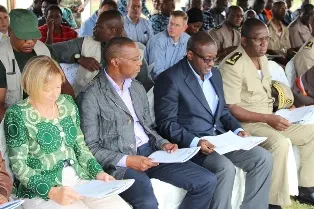
The visit was aimed at getting national and international partners of ADDR acquainted with its programme and structures for the benefit of ex-combatants in order to get feedback that could lead to improvements. The resocialisation centre is designed to prepare ex-combatants for a return to normal civilian life through a one month training programme in different domains including the basics of good citizenship and a choice of trade to help them reintegrate in society.
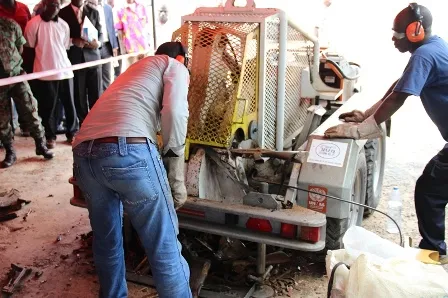
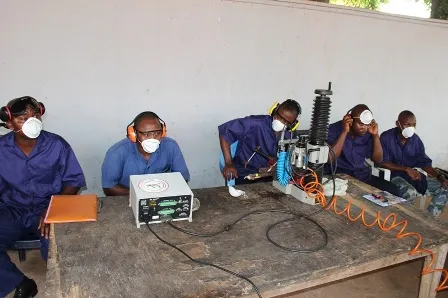
The delegation visited 5 workshops where the ex-combatants receive training in civic education from members of the gendarmerie school; on human rights and the fight against gender-based violence from staff of the Human Rights division of the UN Operation in Cote d'Ivoire (UNOCI) and the UN Population Fund; family planning from the Ivorian Ministry of Solidarity; and prevention against drug and alcohol abuse from the Blue Cross.
Mr. Mbaye Cisse remarked that it would be useful to associate the National Programme for Social Cohesion and the national Commission for Dialogue, Truth and Reconciliation in order to develop a more coherent training programme.
On behalf of the ex-combatants, Eleonore Akre Patrick gave assurances that the assistance provided by the state and international donors would not go in vain and appealed for a rapid deployment of funds for ex-combatants so they do not become easily discouraged.
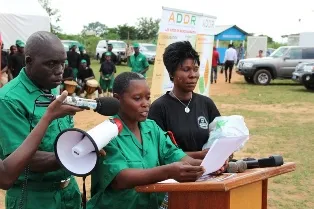
The visit to Guiglo, Cavally region also provided the occasion for the presentation of results of a study on the perception of ex-combatants by the population of Duekoue, San Pedro and Tabou conducted by the Search for Common Ground (SFCG) and sponsored by the UN Development Programme and ADDR.
The Deputy Special Representative and the ADDR boss were accompanied by the Resident Representative of the UN Industrial organization, UNOCI director of DDR, representatives of the ambassadors of France, the US, Belgium, the European Union, the director of SFCG as well as local administrative and political authorities.


