


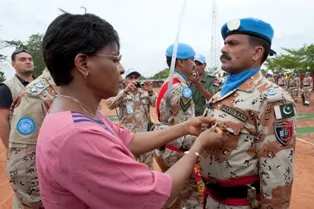
The Special Representative congratulated the recipients, adding that the medal should motive to continue their work. The head of UNOCI highlighted the remarkable contribution of the Pakistani contingents in the implementation of the UN Mission's mandate since their first deployment in the country in 2004. "I'm happy to award you this medal which in recognition of your continued professionalism in working to maintain peace in Côte d'Ivoire", she said while welcoming the perfect collaboration between local authorities and peacekeepers. In this regard, she thanked Ivorians for their support to the soldiers of peace.
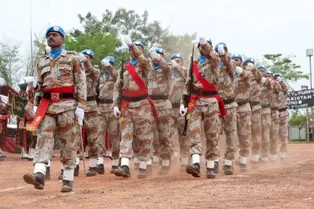
The Commander of the Pakistani Contingent, Colonel Qaiser Mushataq outlined the various tasks carried out by his contingent which is based in Guiglo, one of the most sensitive areas in the country, with regard to working side by side with other Mission components and the local population. The FPU provides escort to UN police officers during daily patrols in the Guiglo, Duékoué and Bangolo area. The also provided security during regional elections and protection for high-level Ivorian officials. Colonel Qaiser thanked the Special Representative, her delegation and local authorities who attended the ceremony.
The head of UNOCI's police component, Commissioner Vianey Nshimiyimana, for his part, welcomed the good collaboration between the Pakistani FPU and UNPOL, which has resulted in both sides carrying out their duties with professionalism. "This Medal represents the international community's gratitude to you for your contribution to peace. Wear it with honour and pride!" he told the medal recipients. The ceremony ended with a military parade.
Donation of equipment to Monitoring and Sensitisation Committees in Guiglo and Blolequin
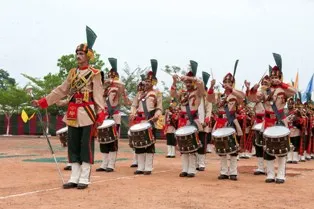
The equipment and materials were bought with funds provided by the United Nations Development (UNDP) and the United Nations Peacebuilding Fund.
To date, Côte d'Ivoire has set up 23 Monitoring and Sensitisation Committees. Chaired by prefects, the committees are composed of deputy prefects, elected local government officials, members of political parties, village chiefs, religious and community leaders, representatives of women's associations and youths.
Created in 2011 in the post-crisis context, the role of the committees is to promote dialogue between local communities, prevent inter-community violence and sensitise people on social cohesion.


